Written by
Recently, I had lunch with a friend who’s a senior executive. After he was dropped off by his Uber and we’d ordered, our conversation turned to organizations — specifically that they’re not flexible in their approach to finding a solution.
My friend asked, “Is being flexible a good thing or a bad thing? In my organization, giving into the other side’s demands is viewed as a sign of weakness.”
I invited him to consider flexibility from another perspective: being strong with his objective but open to how he arrives at it.
Think about it: If you have a goal of getting to work on time, but the route you take is congested, do you sacrifice the goal or find another route? Most of us would remain flexible and find another way so we can achieve the goal. Why would a negotiation be any different?
My friend was listening . . .
Rigidity in our negotiation tactics can undermine our deals by . . .
- creating unnecessary tension.
- restricting creativity.
- eliminating options and potential.
- wasting time as we try to force a singular path forward.
- leading to deadlock or no agreement.
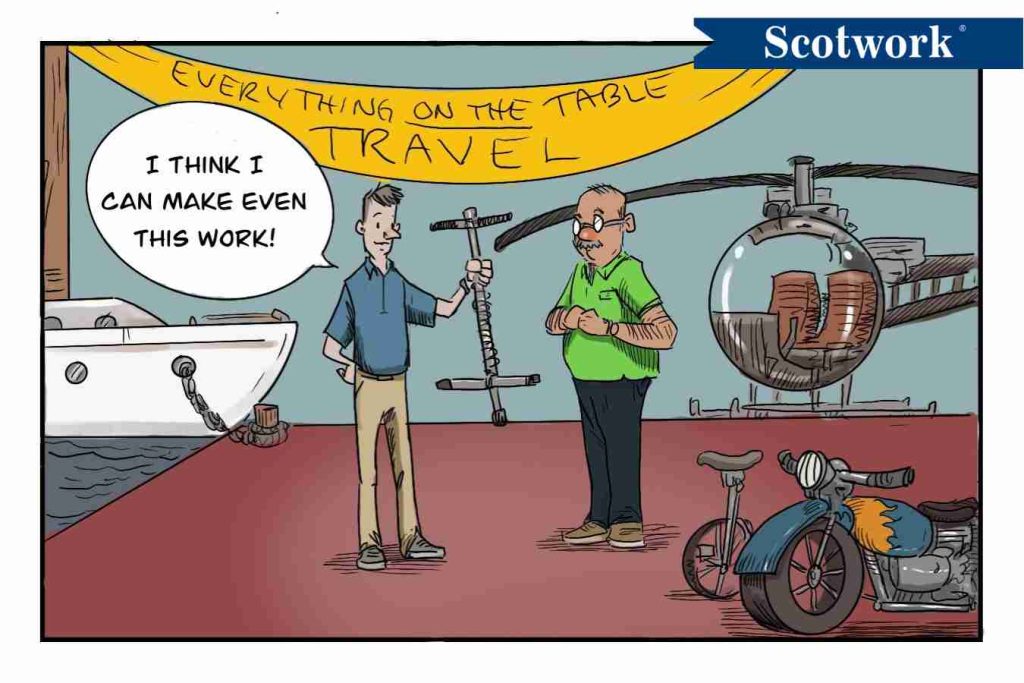
Flexibility in negotiation means being able to pivot and brainstorm out-of-the-box solutions to achieve the desired outcome. It’s not unlike discovering another route or even taking the train, to use my example about getting to work.
Strong negotiators find a path forward to achieve their desired outcome by . . .
- keeping objectives in sight while being flexible on how they get there.
- managing or reducing tension to induce collaboration.
- seeking to understand differences.
- finding ways to say “yes” without compromising their desired outcome.
- ensuring that all parties are willing to support the deal.
As for my friend, the executive, he paused and considered the difference between objectives and tactics.
“For instance,” he said, “my objective right now is to get back to the office. If you give me a lift, I’ll pick up the check.”
“That’s a deal.”
Negotiation Training and Consulting to Help You Achieve Your Objectives.
Rigidity in your negotiation tactics can lead to deadlock and create unnecessary tension. Rely on Scotwork’s 50 years of expertise to help you find a way to make your proposal acceptable to the other side without weakening your desired outcome.