Written by
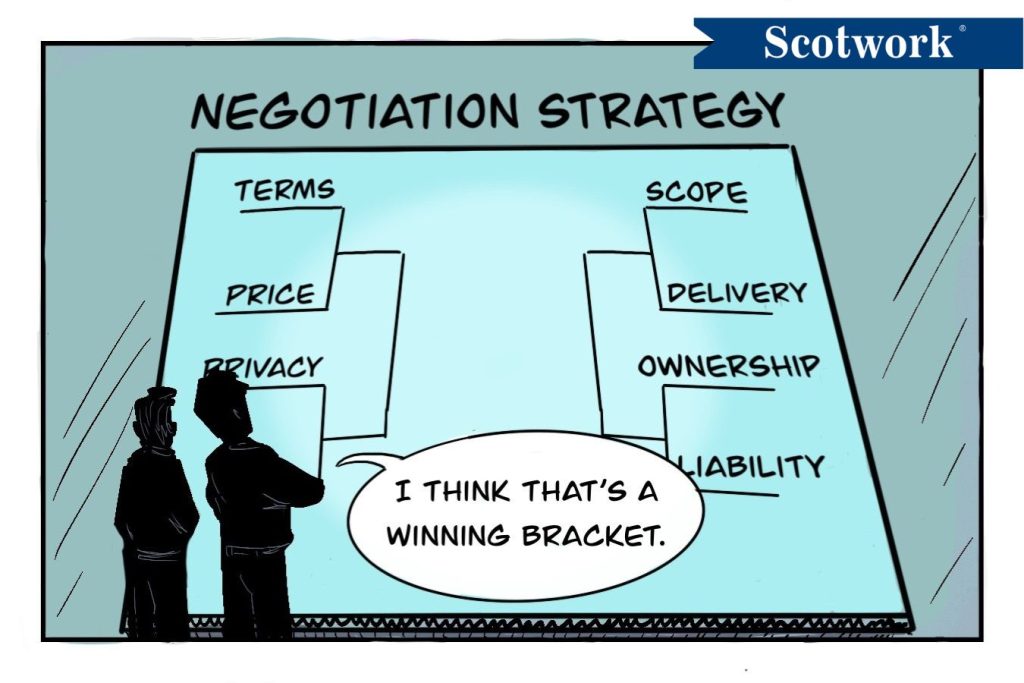
Every March, a curious shift takes place across offices, airports, and home workspaces. Otherwise focused professionals suddenly become deeply invested in buzzer-beaters, bracket integrity, and the fate of schools they couldn’t locate on a map two weeks earlier.
March Madness has a way of capturing attention unlike almost anything else. Estimates vary, but it’s often suggested that US businesses lose billions of dollars in productivity during the tournament. Even if the exact number isn’t known, the broader point is hard to dispute: Work competes with a compelling distraction.
For the most part, this is harmless. But in certain situations, particularly in negotiations, distraction has meaningful consequences.
Signs that the other side isn’t fully present are usually easy to spot: Responses are slower than expected. Points need to be repeated. Details are missed or misunderstood. While none of these behaviors seems significant on its own, collectively they create friction.
That friction tends to show up as negotiations take longer than they should. Conversations circle back over the same ground. Misunderstandings accumulate, sometimes requiring time-consuming clarification. Frustration builds on both sides, and with it, emotions begin to rise. As that happens, the quality of decision-making often declines. The result isn’t necessarily a failed deal, but more often a suboptimal one.
So, what can you do when you suspect the other side is distracted?
The instinct, for many, is to push through and hope for the best. In practice, that tends to prolong the problem rather than solve it. Here are 5 ways to address the situation in a manner that maintains momentum and improves the quality of the interaction.
- Acknowledge what you’re observing without making it personal.
You’re not calling anyone out, but you’re opening the door to a more productive conversation. A light touch is best. Observing that there may be competing priorities can help both sides reset and consider whether this is the right moment to engage fully. - Adjust the pace to improve clarity.
When attention is divided, there’s a temptation to move faster just to make progress. This often leads to more repetition. Slowing down to summarize key points, confirming understanding, and checking alignment will ultimately save time and reduce confusion. - Make your communication more explicit.
Subtlety is lost when someone is distracted. Clear, direct language is more effective. State what you’re hearing, what matters most, and where flexibility exists — this will ensure that critical points land as intended. - Be willing to pause if needed.
There are moments when continuing the conversation isn’t productive. Suggesting a break or rescheduling for a time when both sides can be fully present isn’t a failure of momentum; it’s often the most effective way to protect the quality of the outcome. - Maintain your own discipline and presence.
It’s easy to notice distraction in others and overlook it in ourselves. Entering a negotiation while thinking about scores, emails, or other commitments creates the same challenges you’re trying to manage. Preparation isn’t only about strategy; it’s also about showing up with full attention.
March Madness will continue to deliver its mix of excitement, unpredictability, and broken brackets. It’s part of what makes this time of year enjoyable.
But in negotiations, attention remains one of the most valuable resources at the table. When it’s divided, the quality of the outcome is often diminished.
One last thing: If you’re looking for a Cinderella pick, go UCLA Bruins! (I hope they’re still in it by the time you read this.)
Negotiation Training and Consulting to Help You Focus Your Stakeholders.
When you suspect the other side is distracted, rely on Scotwork’s expertise to address the situation in a manner that maintains momentum and improves the quality of the interaction.