Written by
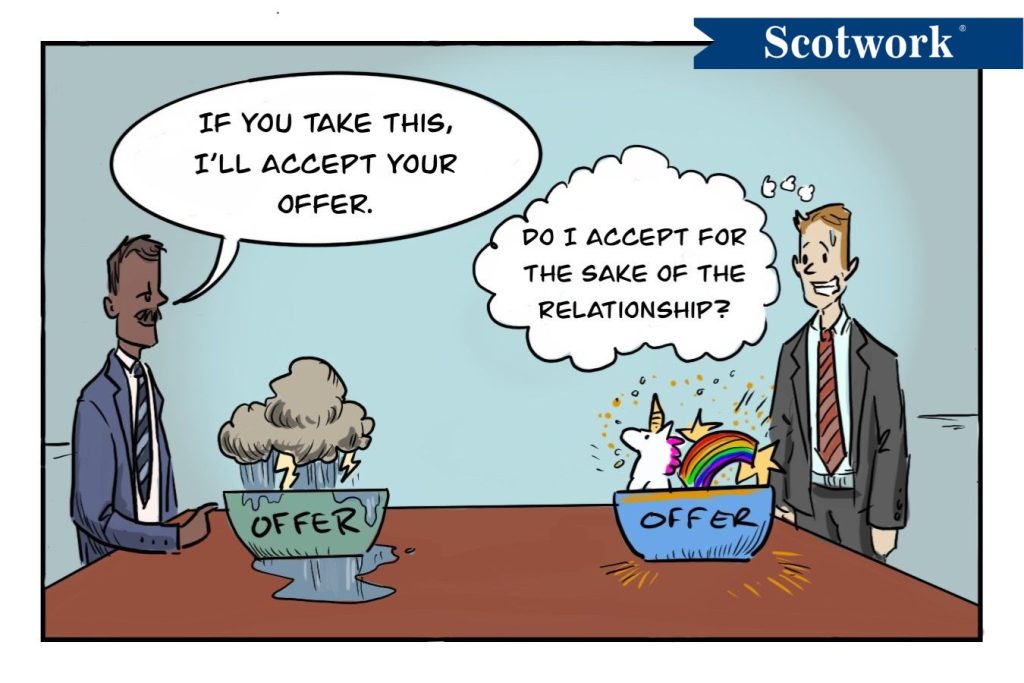
If you think people pleasers automatically strengthen negotiations, you’re wrong. Yes, they believe in the value of protecting relationships (and that’s good), but the choices that come from this urge frequently do more damage to outcomes than most negotiators realize.
Recently, I was debriefing a client team after they completed a Negotiation Capability Survey, which is part of Scotwork’s negotiation training program. The results showed a consistent pattern: The team avoided deadlock, offered concessions early, and gave in too often just to close deals.
I asked the room, “Does this resonate with you?” It did. Then I asked a different question: “Are there any people pleasers in the room?” All but one person raised their hand.
People pleasers don’t give in because they lack negotiation skills. They give in because preserving harmony feels safer than testing the relationship. Their organization’s culture places a strong emphasis on relationships, sometimes at the expense of outcomes.
The team leader explained it this way: “We negotiate with the same people all the time. We don’t want to damage the relationship.” Many people pleasers learn early in their careers that being agreeable protects relationships and makes conversations easier.
Conflict or disagreement can feel risky. What if the other side becomes frustrated? What if the relationship suffers? What if the deal falls apart? But I asked the group another question: “What if doing what feels comfortable in the moment actually damages the relationship over time?” The room went quiet.
Every time a negotiator concedes too quickly, avoids difficult conversations, or negotiates with themselves before the other side asks, they send a signal.
They’re teaching the other party what to expect.
If one side consistently gives ground to preserve harmony, the relationship gradually becomes unbalanced. The other side learns that pushing a little harder will likely produce results.
Over time, the other party expects more concessions. The people pleaser may then feel frustrated or resentful, especially when they realize they gave away more than necessary.
Ironically, the very behavior meant to protect the relationship can slowly undermine it. The solution isn’t to tell people pleasers to “be tougher.” That advice rarely works because, in the moment, they believe they’re doing the responsible thing. Instead, they need to learn how to be clear and assertive while preserving their position.
Are you a people pleaser? If so, you may have . . .
- offered concessions before the other side asked for them.
- avoided pushing back even when the conversation warranted pushback.
- said “yes” when you should’ve said “no” — just to get to the end of a discussion.
Even the most experienced negotiators make some or all of these choices. Making them too frequently, however, has an insidious long-term effect. Strong business relationships aren’t built on constant agreement. They’re built on a foundation of meaningful interactions.
Negotiation Training and Consulting Help Your Team be Assertive While Protecting Relationships.
If your team may be prioritizing harmony in their deals at the expense of value, rely on Scotwork’s expertise to help reset the balance and support ongoing change for your team.