Written by
Recently, my daughter headed back to college after spring break. Before she left, she asked for one thing: my peanut butter and jelly pancakes.
They were a complete failure. I don’t know what happened. I wanted our last breakfast together to be great; instead I served up a plate of disappointment. And then I made it worse.
I got quiet. A little sulky. Annoyed at myself, which radiated outward. What should’ve been a warm send-off turned awkward, and I spent most of it in my own head instead of with my daughter.
It took me an embarrassingly long time to recognize the real problem. It wasn’t the pancakes. It was my attitude. And my attitude was contagious.
I’ve been thinking about that morning ever since — not because bad pancakes are a crisis, but because the same dynamic plays out in negotiations every single day. The attitude we bring into the room shapes the outcome far more than most negotiators realize.
The way you enter a room, the energy you bring, whether you seem tense or grounded — it all communicates to the other side before a single word is spoken. And it informs whether the conversation will be collaborative or combative.
Attitude isn’t a soft skill. It’s a strategic one. My pancake disaster reminded me of 3 ways to make sure you’re walking in with the right mindset.
- Know why this negotiation matters to both sides. When we’re anxious going in, it’s usually because we’re bracing for a fight. When you do your homework on the other side’s pressures, constraints, and goals, you stop preparing for battle and start preparing for a collaborative conversation.
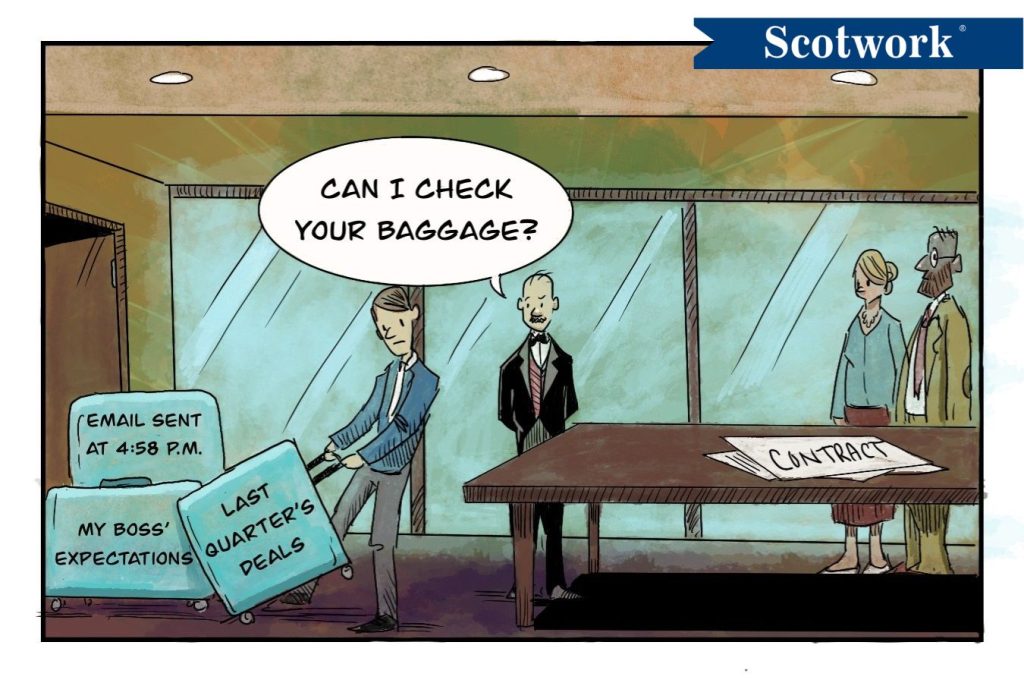
- Check your baggage at the door. Negotiation and relationship history, not to mention the internal pressure you’re under, comes into the room with you. Before you start, name what you’re carrying and consciously set it aside.
- Set an intention, not just an agenda. Ask yourself, “What do I want the other side to experience in this conversation?” Do I want them to feel heard? To feel like a partner? Set that intention deliberately, then let it guide your behavior.
Even with the best preparation, things happen. The other side pushes back harder than expected. A number comes in way off. Someone says something that lands wrong. Suddenly, your carefully maintained composure cracks.
Here are 3 ways to reset quickly . . .
- Label the feeling before it labels you. The moment you notice a shift (frustration creeping in, defensiveness rising), stop and label it to yourself: I’m irritated. I’m starting to dig in. That moment of self-awareness creates distance between the emotion and your reaction, saving you from doing something you’ll need to walk back later.
- Slow the conversation down. When something is uncomfortable, we instinctively push through it. That’s when expensive mistakes happen. Ask a clarifying question. Suggest a short break. Buy yourself space to respond thoughtfully instead of reacting impulsively.
- Reconnect with your interests, not your positions. When we get knocked off-balance, we dig in, stop listening, and start defending. Instead, refocus on the underlying question: What am I trying to achieve here? Reconnecting with your interests breaks the defensive loop.
Even the best negotiators get rattled, but they notice when it’s happening and know how to course-correct.
My daughter and I hugged it out before she left. I’m fortunate. In negotiations, you don’t always get that second chance.
Negotiation Training and Consulting to Help You Develop the Most Effective Mindset for Your Deals.
Rely on Scotwork’s expertise to align your team with a winning focus in their negotiations.