
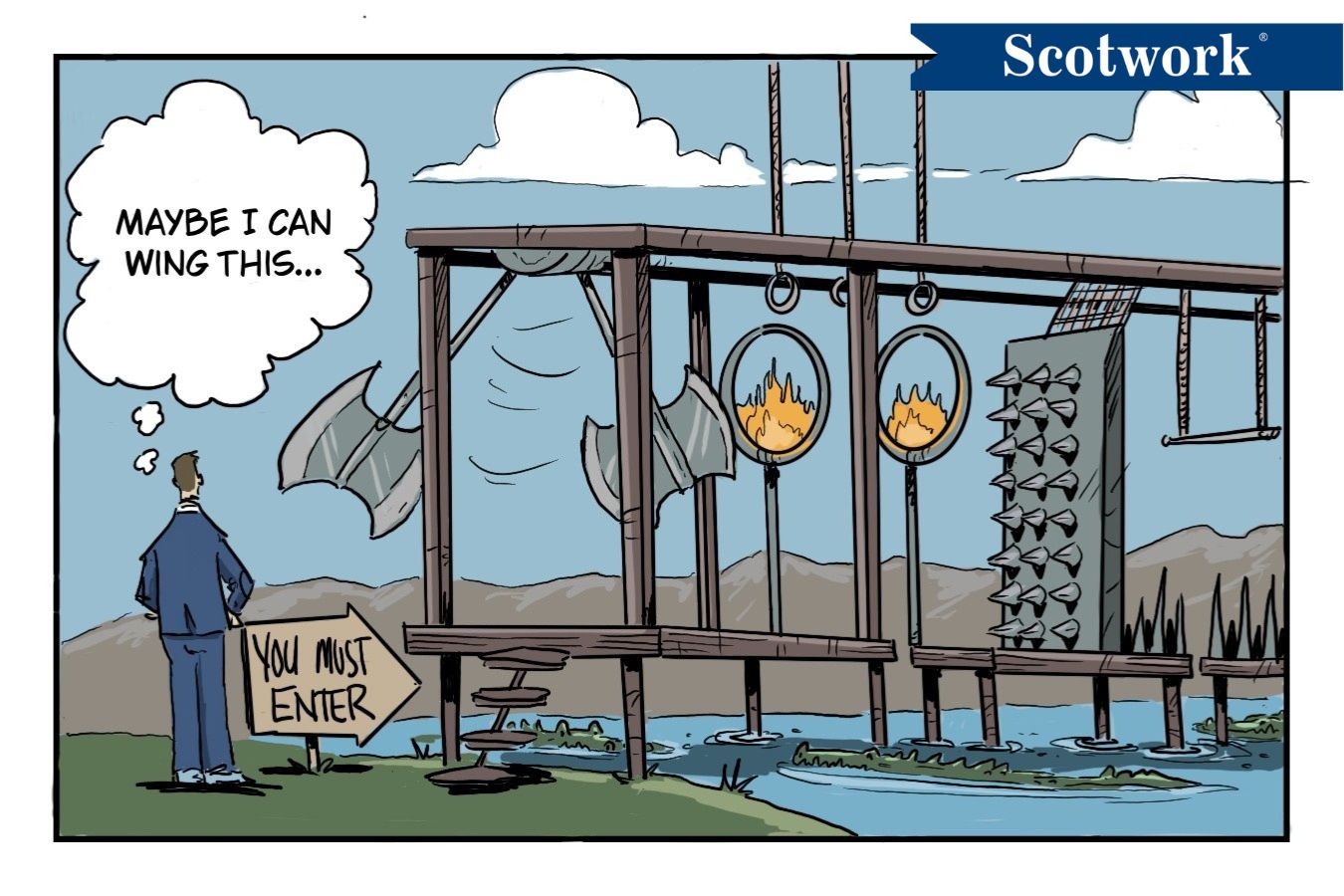
I asked a group of sales and procurement professionals how many of them consistently prepare before a negotiation. A few hands went up. Then I asked them how many wish they prepared more. Almost every hand went up.
These weren’t rookies. They knew preparation mattered. They just weren’t doing it. What struck me wasn’t the admission; it was how quickly everyone nodded, like they’d been waiting for someone to say it out loud.
So, let’s say it out loud: Here are 5 reasons why most of us don’t prepare for negotiation and why that habit is more expensive than you might think.
1. “I already know how this is going to go.”
Experience is a gift — and a hazard — in negotiation. The feeling of familiarity gets mistaken for readiness. According to Scotwork’s Global Negotiating Capability Survey, only 59% of negotiators always define their desired outcome before they begin. That means four in 10 sit down to negotiate without a clear picture of what they’re trying to achieve, leading to longer negotiations and suboptimal outcomes.
Experience tells you what happened before. Preparation tells you what to do next.
2. “I don’t have time.”
Our research shows that 41% of negotiators say they occasionally have no time to prepare. Work environments frequently prioritize urgency over criticality. Negotiation prep is considered “important but not urgent” . . . until it’s too late.
Negotiators occasionally confess that the more confident they were going in, the less time they spent on preparation. However, when the negotiation doesn’t go well, “not having enough time” becomes a common excuse.
3. “I’ll figure it out in the room.”
Once, I walked into a negotiation with no prep at all. Unfortunately, it went well. One successful improvisation was enough to build a bad habit. I was great at improvising when my relationships carried me through, and I didn’t get hit with a curveball. My improv failed when my luck ran out, and I lost a significant deal.
Only 32% of negotiators say they always know what questions they’ll need to ask when they meet the other party. Two-thirds walk in without knowing what they don’t know. That’s not agility — that’s exposure and risk.
4. “This negotiation intimidates me.”
Some negotiations are scary. The stakes are high, the relationship matters, and instead of preparing — which means staring directly into an abyss of uncertainties — we avoid it.
What’s striking is that intimidation and preparation have an inverse relationship: The less you prepare, the more intimidating the negotiation feels. Only 18% of negotiators have a fallback plan if they can’t get a deal. That’s not confidence; that’s exposure dressed up as optimism.
5. “I’m not sure what I’m supposed to prepare for.”
This is the reason nobody says out loud, but it may be the most common. It’s not laziness or arrogance. Negotiators simply aren’t taught what good preparation looks like. Or their training is so poor, it clouds what good preparation looks like.
As a result, the task feels enormous and undefined, and negotiators feel it’s easier to not start than to start wrong. This is a skills gap masquerading as a motivation problem. The negotiators who prepare most consistently are those with a repeatable process that they trust.
Preparation doesn’t allow you to predict the future. It expands your options and available moves, while defining your priorities and limits. The negotiator who prepares can manage their negotiations. The one who doesn’t just reacts.
Negotiation Training and Consulting to Help Your Team Prepare Effectively for Their Deals.
Rely on Scotwork’s expertise to help your team get their best outcome through optimized deal preparation, which allows them to manage their negotiations instead of just reacting.