
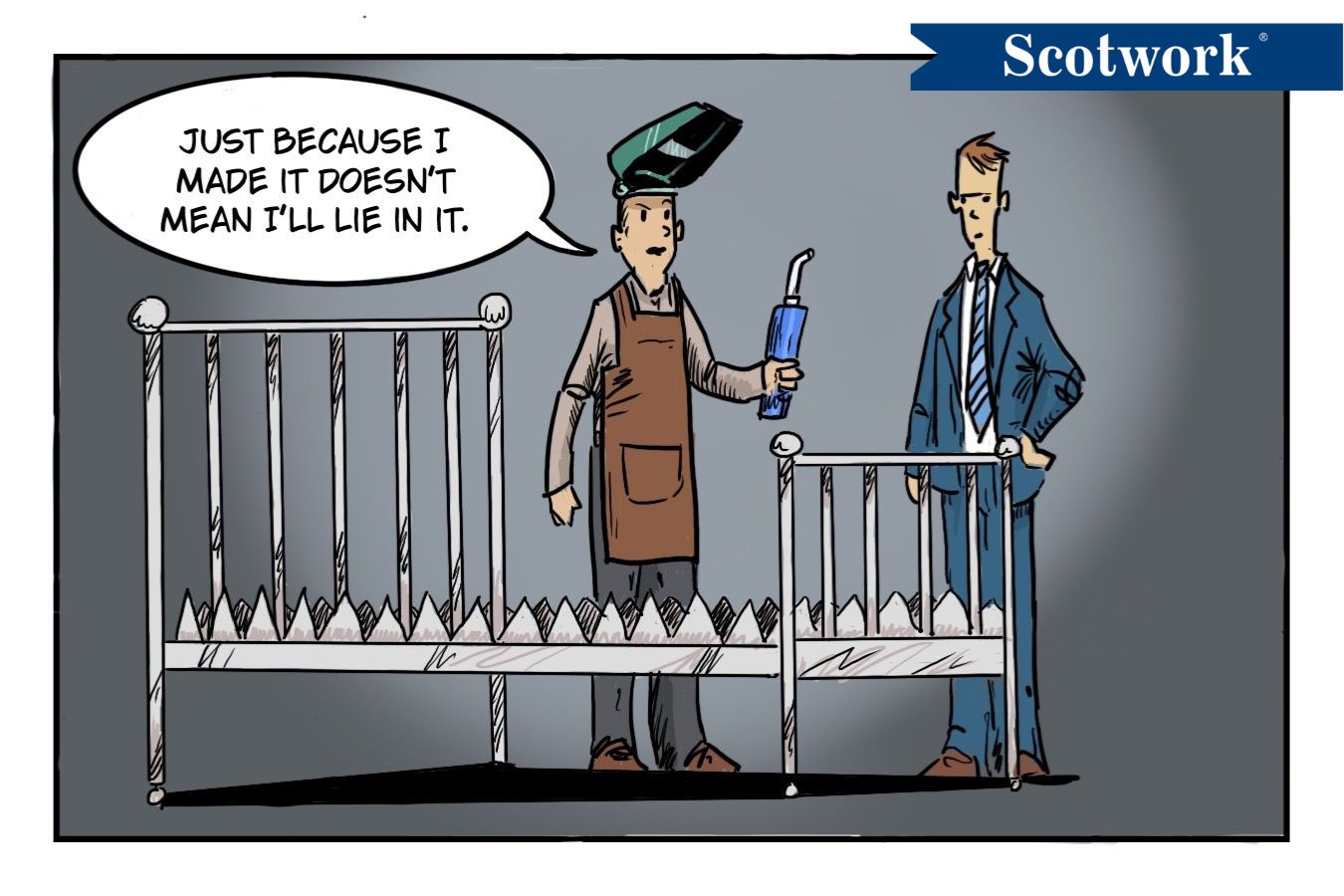
There’s an old saying: You’ve made your bed, now lie in it. Great life advice. Terrible negotiation strategy.
At some point, almost every negotiator finds themselves handling a deal they, or someone before them, made under pressure or the wrong circumstances. If you’re one of them, maybe you gave away a concession to close and now it’s baked into every renewal. Maybe your predecessor was generous with payment terms, and the other side confused “one-time goodwill” with “permanent policy.” Whatever the issue, you’re living with a precedent that’s costing you, and you need to change it.
The good news is, you can. It just takes a little finesse.
Give Them a Reason to Change
Nobody changes because you want them to. They change to get something they want (a carrot), to avoid an undesirable consequence (the stick), or to address new circumstances (reality).
The carrot approach is obvious: offer something of value in exchange for the reset. A new term, a better rate structure, enhanced service — something that makes the new deal feel like a step forward. But don’t overlook the sticks you have available, such as the prospect of you walking away.
Sometimes the reason to change is simply that the old arrangement is going away, a product gets discontinued, or a service model shifts. That’s reality, and reality, delivered with respect, is a perfectly legitimate reason to renegotiate a precedent.
Give Them Time to Adjust
Nothing creates unnecessary drama like an abrupt ending. If you’ve been operating under a certain arrangement for years, and one day you show up announcing that it’ll stop on Friday, don’t be surprised when the relationship takes some shrapnel.
Transition timelines are one of the most underused tools in a negotiator’s kit. They cost little in the short term, but they provide long-term value: cooperation and a counterpart who feels treated fairly, which is important if you intend to keep doing business together.
Expect Them to Want Changes Too
A lot of negotiators get caught flat-footed when they open the door to revisiting the deal and, suddenly, the other side has a list of their own.
This isn’t a trap; it’s just human nature. When you signal that the existing agreement is up for discussion, you’ve implicitly invited a broader conversation. Before you walk in, know your map. Where are you willing to travel? Where are the roads closed? If you don’t know the areas where you could move and the areas where you absolutely won’t, you’ll either give away too much or look like you came in bad faith. Neither is a great outcome.
Be Empathetic — and Mean It
Changing precedent can create real complications for the other side in ways that aren’t obvious to you. A shift in payment terms might affect their cash flow. A change in delivery structure might cause them to retrain their whole team. A pricing adjustment might require approvals three tiers up an org chart, from someone you’ve never even met.
You don’t have to solve their problems, but you should acknowledge them. In a negotiation, empathy isn’t softness; it’s intelligence. It tells you where the friction points are, keeps the relationship intact, and dramatically increases the odds that the person across the table actually implements the change rather than quietly resisting it.
Precedent isn’t permanent. With the right approach, even the most entrenched arrangements can be shifted without torching the relationship. Your bed’s been made, but that doesn’t mean you have to keep lying in it.
Negotiation Training and Consulting to Help You Change a Precedent.
Rely on Scotwork’s expertise to help you shift even the most entrenched arrangements without torching the relationship.
Get in touch with one of our experts today.