Written by
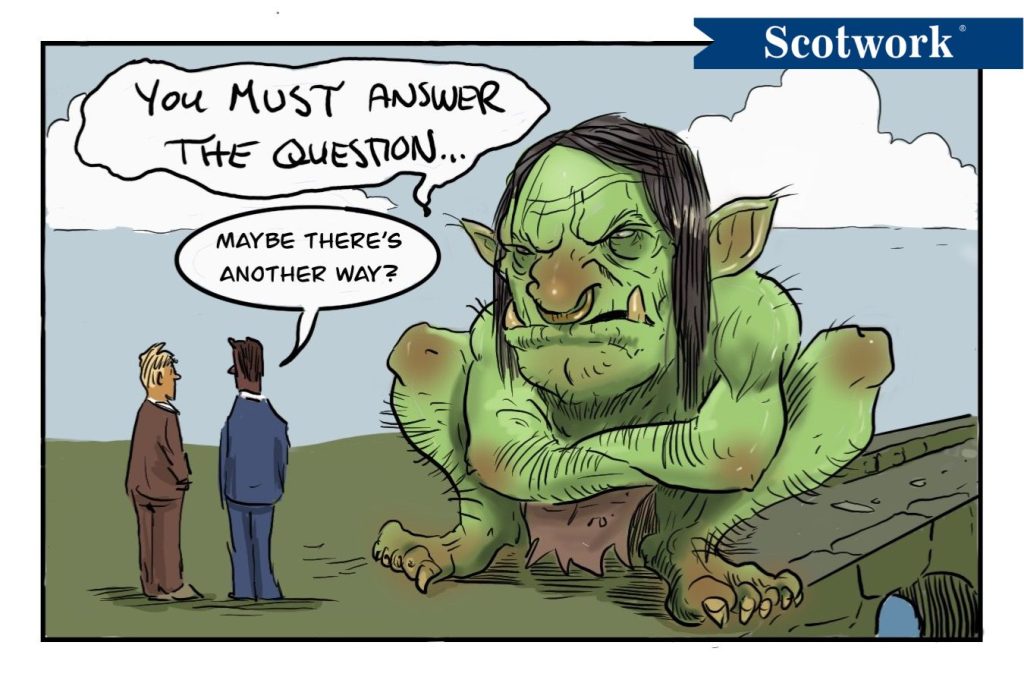
Imagine sitting down at the negotiating table and the other side says, “We might owe you money. We’re just not sure how much, or exactly when and how we’re going to pay it.” That’s essentially where American businesses find themselves right now.
A little over a week ago, the Supreme Court ruled President Trump’s tariffs, imposed under the International Emergency Economic Powers Act, illegal. In the rush to celebrate or condemn the ruling, a far messier question got buried: What happens to the $133 billion the government already collected?
The honest answer: nobody knows.
The Court’s majority said nothing about refunds. In his dissent, Justice Brett Kavanaugh called out his colleagues for leaving that question unanswered, warning the refund process will likely be a “mess.” Asked directly whether he’d pay businesses back, Trump said he expects that question to be litigated “for the next five years.”
Meanwhile, more than 300,000 importers are trying to figure out if they’re owed money, and consumers — who bore the brunt of higher prices — are almost certainly out of luck. Trade attorneys warn that eligible refunds could take months or even years to arrive.
Welcome to chaos at the negotiating table.
This Happens More Than You Think
The tariff situation is extreme, but the underlying dynamic isn’t unusual. Deals stall not because parties can’t agree on substance, but because critical questions simply can’t be answered in the moment. These circumstances are uncomfortable because we’re wired to want resolution before committing to anything. But in a negotiation, waiting for certainty is often its own decision and rarely a good one.
How to Move When the Ground Is Shifting
Negotiators who thrive in chaotic moments share 4 characteristics . . .
- They separate what they know from what they don’t. Right now, businesses know the tariffs are illegal and that some refund process will eventually exist. What they don’t know is the timeline, the mechanism, or the amount. The discipline is observing that boundary — treating unknowns as unknowns, not as fears or assumptions.
- They build agreements that can flex. A deal can acknowledge the uncertainty of the moment. Contingency language, price-adjustment clauses, and defined review points let you move forward without pretending you have answers that you don’t. The goal isn’t a contract that covers every outcome — it’s one that can survive them.
- They don’t let the unanswered question become a hostage. Businesses waiting on refund clarity before moving forward with contracts, suppliers, or trade relationships are letting a question the Supreme Court itself refused to answer hold their operations hostage. The better move is to acknowledge the open item, agree on how you’ll handle it when it resolves, and keep going.
- They protect their interests without poisoning the relationship. In chaotic moments, there’s a temptation to go soft just to get the deal done or go hard, loading contracts with protective language that signals distrust. Neither extreme serves you. The skill is being explicit and fair: “Here’s what I need if X happens. Here’s what I’m committing to regardless.”
The Real Negotiation Nobody’s Talking About
There’s a second negotiation happening right now that most companies haven’t focused on: the one with their own customers, suppliers, and partners.
Many businesses passed tariff costs downstream. Those relationships are now in murky water. Will prices come back down? Do customers expect relief? Are suppliers going to renegotiate?
That’s where the real work is: not waiting on Washington to sort itself out but proactively having the conversation with the people you actually do business with. Acknowledging the ambiguity. Agreeing on how you’ll navigate it together.
The Supreme Court has answered the Constitutional question. The commercial question — how we deal with each other in the aftermath — that one’s on us.
Negotiation Training and Consulting to Navigate Every Difficult Environment.
Rely on Scotwork’s expertise to help you deal with the fallout from tariffs or any other macroeconomic situation.