Don’t Make Them Guess
 Written by
Kirbi Isaac
| 08/07/2026
Written by
Kirbi Isaac
| 08/07/2026
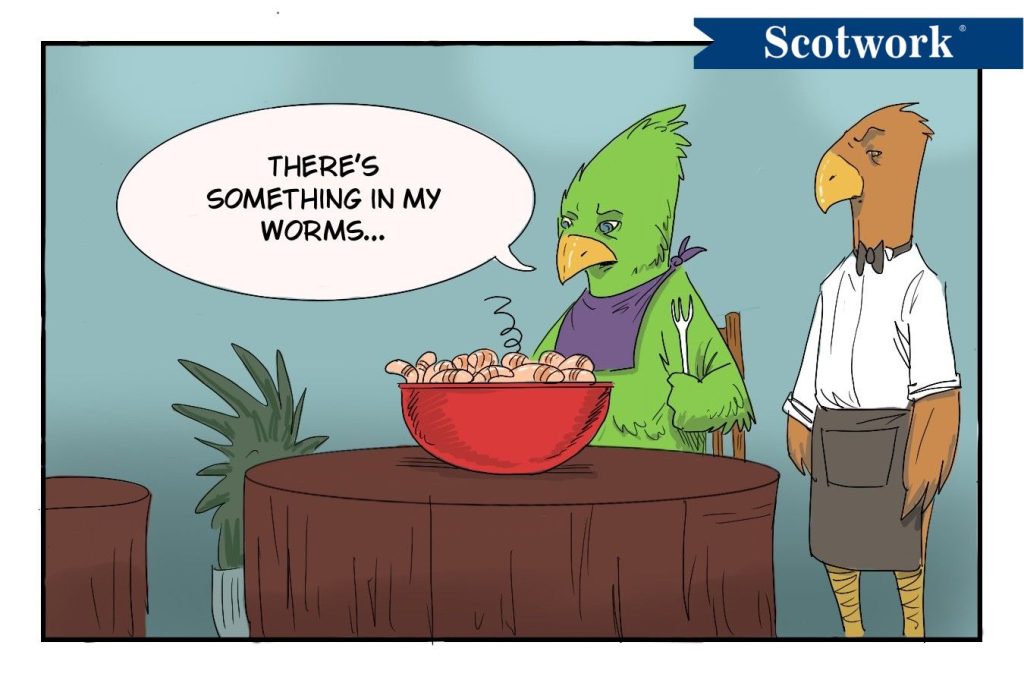
A friend and I recently went out to dinner and had a great meal. We ordered a few dishes to share and had a wonderful time catching up. As we were finishing the last bite, we noticed a hair on the plate — and it wasn’t ours.
The server apologized and went to speak with the manager. A few minutes later, she returned with a solution: The restaurant would provide us with complimentary desserts.
Now, on paper, that sounded reasonable, but it didn’t solve our problem: Neither of us wanted dessert. After finding a hair in our food, we weren’t exactly interested in ordering anything else from the kitchen.
I thanked the server for her offer, but I told them we would rather they take the equivalent value off the bill. She said she’d have to check with the manager. Moments later, she let us know that they’d removed not only the appetizer, but also the entire entrée that had the hair.
The outcome ended up being better than either of us expected — not because I asked for more, but because I asked for what would make it right. I didn’t make a scene or expect the restaurant to read my mind. I simply told them what outcome would leave us feeling like they had handled the situation fairly.
This incident got me thinking about how often we do the exact opposite in negotiations. We point out the problem, but never explain what a good outcome looks like. We feel the other side should know what would make things right. We tell them what isn’t working and then leave them to figure out how to fix it. More often than not, they come back with a solution that makes sense from their perspective — not necessarily one that addresses what matters most to us.
That’s exactly what happened at the restaurant. The manager’s first solution was thoughtful, but it wasn’t aligned with what we actually wanted. Once I explained what would make things right for us, the conversation became more productive.
The same thing happens in negotiations every day, when everyone knows there’s a problem, but no one has defined what success actually looks like . . .
- Customers reject proposals without explaining what would make them workable.
- Suppliers hear concerns but never receive direction.
- Internal stakeholders say, “This won’t work” without offering an alternative path forward.
If you want to get closer to your desired outcome, don’t stop at identifying the issue. Help the other side understand what would solve it.
- Figure out what would make it right from your side.
- Explain to the other side in their own terms.
- Emphasize how this remedy will improve relations moving forward.
Because the goal of a negotiation isn’t just to be heard — it’s to get results. The people who consistently get better outcomes aren’t the ones who complain the most; they’re the ones who make proposals that include what they actually want. So, the next time a delivery misses the mark, don’t stop at “that won’t work.” Instead, ask yourself one simple question: what would work? Then tell the other side. You may be surprised at their receptiveness.
Negotiation Training and Consulting to Help You Get What You Actually Want.
In negotiations, the people who consistently get better outcomes make proposals that include what they actually want. Rely on Scotwork to help you get more of what you want.
Similar articles

By Brian Buck | 11.09.26
Your Renewal Just Got Flagged
Recently, I worked with a large sales team that showed me something they’d built: an…
By Brian Buck | 10.07.26
Improve Internal Negotiations: Be a Creator
In my position, I’m frequently asked some variation of the following question: “How do I…