A Bad Deal Is Hard to Live With
 Written by
Brian Buck
| 10/30/2026
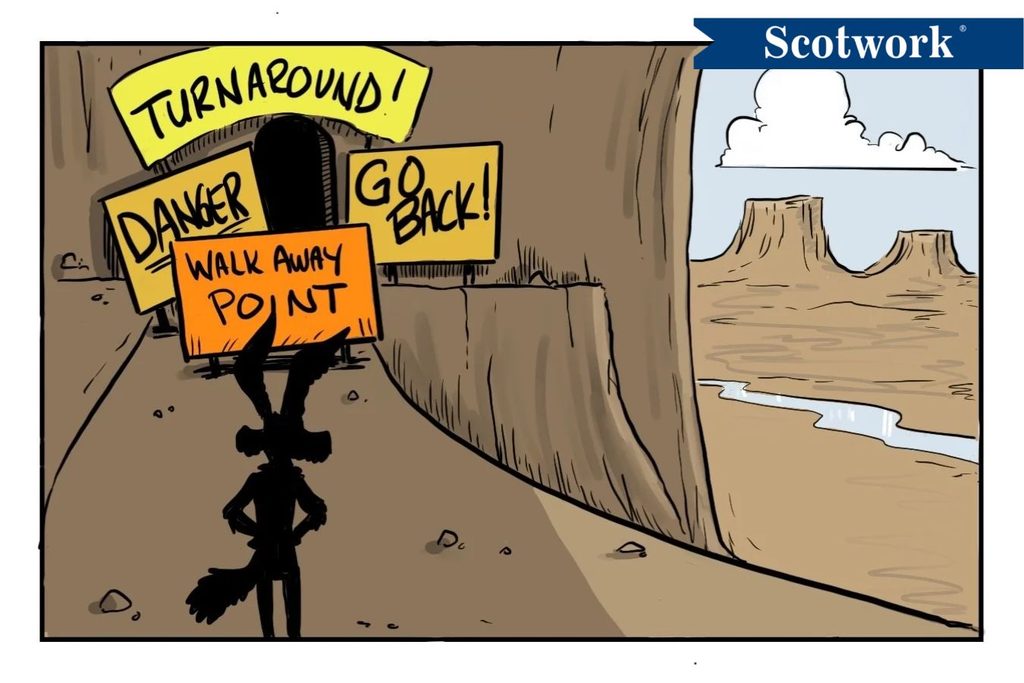
I walked away from a client. Not a small one, either. It wasn’t easy.
The relationship had turned toxic. We were doing everything in our power to please them, but they were never happy. There was a standing threat to switch to a competitor, we defended the same contract through multiple RFPs, and the profit no longer justified the cost of the relationship.
I made the call to walk away. My team was stunned. In the agency world, you chase business and fight to keep it. You don’t resign it. But once I walked them through my rationale, they understood something I wish I’d said out loud years earlier: A bad deal is hard to live with.
That said, we could’ve clarified what bad looked like long before we got there and had a clearer strategy. That would’ve avoided the string of rate discounts we handed over, every one of them an attempt to fix a relationship problem with a pricing solution. Our margin, not to mention our team, would’ve been healthier.
That’s the power of a walkaway point you never actually use.
A walkaway isn’t just a backstop. Most people think of a walkaway as the point past which you won’t go. It does more than that.
It helps you perceive decline sooner. If we’d defined what a bad deal looked like, we would’ve seen it taking shape and had time to do something about it. Instead, it felt like a surprise, and surprises get handled poorly.
It sets clear expectations. Defining a bad deal requires defining a good one. Then you can be specific about what you need to sustain it while there’s still goodwill.
It protects value. When you know your limits, you know which levers you have. Without that, the temptation is to throw money at the problem, which results in a thinner margin and the same unhappy client.
Deadlock Is Where This Gets Tested
Knowing when to walk away from a negotiation starts with understanding what makes a deal worth doing in the first place. There’s a moment in many negotiations where you hit an impasse. Your walkaway is what keeps you from leaping that chasm just to get the deal done. It also gives you a way to ask a more difficult question: Are we actually at an impasse, or is my must-have unrealistic?
When you challenge the deadlock, you’re also challenging your own walkaway. If it holds up to that scrutiny, the deadlock is real and your walkaway is justified. In my experience, the scrutiny can yield creativity that produces a route you hadn’t considered.
When you’re testing a deadlock, ask yourself four questions:
- Have I truly exhausted the circumstances under which I’d move forward?
- Are my must-haves realistic?
- Can I live without this deal?
- Does walking away cost less than doing the deal?
If the answer to all of these questions is yes, the deadlock is real. A single no sends you back, either to adjust your walkaway or to find another way through.
What Happened When I Made the Call
I was sure they’d be glad to be rid of us. Instead, they were surprised and asked why.
To be clear, I wasn’t bluffing. If they’d said, “Understood — send the transition plan,” that would’ve been the end of it. But because I’d thought it through, I could explain exactly what wasn’t working, without heat and blame.
They acknowledged the relationship had been rocky. I acknowledged we owned part of that. They asked if we could find a way to fix it. In the end, we put something in place that outlasted my time at the agency.
None of that would’ve happened if we weren’t genuinely willing to walk. Knowing your walkaway isn’t about actually walking away; it’s about knowing what you want out of a deal.
Training and Consulting to Understand When to Walk Away from a Negotiation (and When Not to)
Your walkaway point helps you define what is and isn’t a good deal so you don’t commit to something you can’t support. Rely on Scotwork’s expertise to help you define your walkaway for your crucial negotiations.
Get in touch with one of our experts today.
FAQ
When should I set my walkaway point?
Before you need it. Setting it under pressure, in the middle of a deteriorating relationship, is how you end up negotiating with yourself.
Isn’t threatening to walk away just a tactic?
It is when you don’t mean it, and that’s when it fails. People can tell. A real walkaway changes how you talk about the problem, because you’re explaining rather than pressuring.
How do I know whether we’re really deadlocked?
Test it with the four questions above. Most impasses turn out to be a must-have that was never as firm as it felt.
What if my walkaway means losing a big account?
Then price it honestly. Count the discounts, the rework, the management time, and what it’s doing to the people serving it. Revenue and profit aren’t the same thing, and neither one captures what a toxic account costs you.
How do I tell a client I’m ending the relationship?
Be specific about what isn’t working, own your share of it, and give them a clean transition. You may be surprised by the response, but be ready to walk.
Similar articles
By Brian Buck | 23.10.26
Zombie Deals
It’s zombie season, which seems like the right time to talk about deals that won’t…
By Brian Buck | 16.10.26
When the Deal Is About You
Recently, I helped a brilliant friend negotiate a job offer. He’s literally a rocket scientist….
By Brian Buck | 02.10.26
The Deal After the Deal
Last week, roughly 16,000 Boeing engineers and technical workers ratified a new four-year contract, days…