The Deal After the Deal
 Written by
Brian Buck
| 10/02/2026
Written by
Brian Buck
| 10/02/2026
Last week, roughly 16,000 Boeing engineers and technical workers ratified a new four-year contract, days before their old one expired. The timing wasn’t incidental; if the contract expired, they could’ve walked out, stalling two programs Boeing can’t afford to stall: certification work on the 737 MAX 10 and the 777-9.
Members rejected an earlier offer in August, and they authorized a strike. Boeing came back and offered more. By the union’s math, the ratified deal is worth 36% in wages over four years, up from 29% in the offer that got voted down.
Here’s the part most of the coverage skipped: The contract isn’t just Boeing’s new deal with its engineers; it’s the opening position for the next negotiation.
Two years ago, Boeing’s machinists struck for 53 days and came back with a four-year agreement worth 38% in general wage increases, 44% compounded, plus a $12,000 ratification bonus. Their union called it a new standard for the industry. The engineers’ union said the machinists’ contract would be the foundation for their own negotiations in 2026 and that contract would set the table for the machinists’ next round in 2028.
That’s how negotiation actually works. You’re rarely negotiating just one deal. I learned that the hard way.
Years back, my team was developing a big influencer marketing deal with a sub-brand of a large conglomerate. We worked with three other brands under their umbrella that seemed to operate autonomously. They ran their own budgets and never once referenced another brand’s agreement. So, we treated each one as its own negotiation.
The program had around 1,000 influencers visiting retailers across the country. To close the deal, we conceded a list of value-adds: virtual team training at our expense, market research, and creative assets they could repurpose. The biggest concession was reducing their out clause. We typically required 120 days to end a program in order to give the influencers proper notice. We finally gave them 45 days.
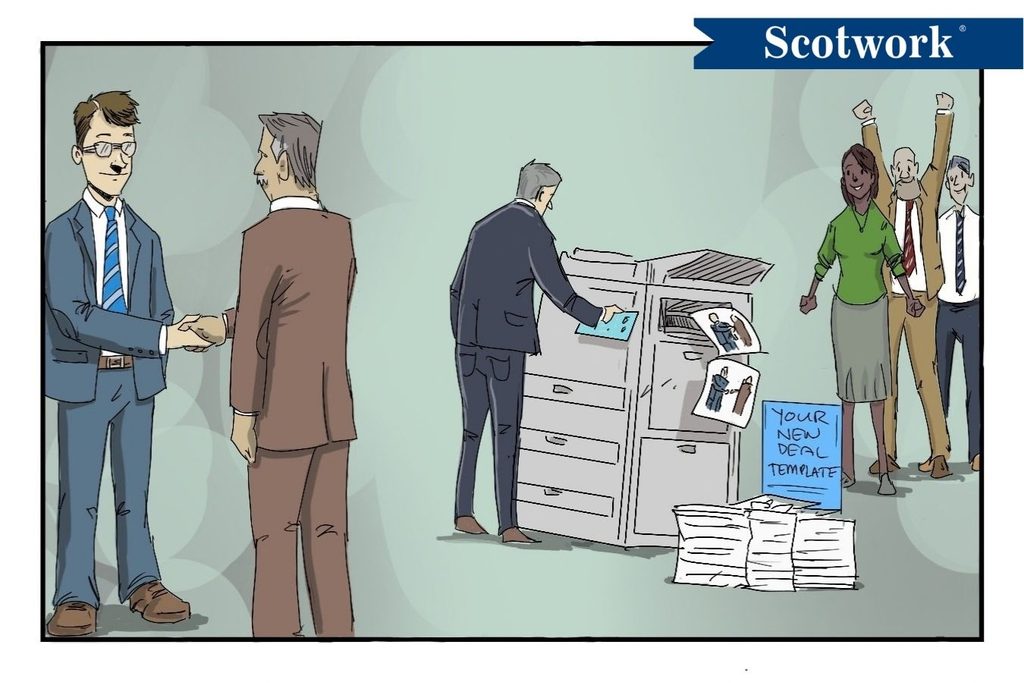
Within a month of signing, the other brands came back to us. They wanted 45 days too. And while they were at it, they wanted the training, the research, and the creative for their own brands. Our deal had become the template for every deal under their umbrella.
Most of us aren’t negotiating in public with a union press release and a ratification vote. Word spreads and your deals travel anyway.
Here are 5 ways to keep today’s deal from negotiating against you tomorrow . . .
1. Know who else will read your deal.
Before you agree to anything, ask who will hear about this and who might cite it: other divisions, other customers, the same counterpart at renewal. The cost of not knowing can show up quickly.
2. Price the precedent, not just the transaction.
A concession that looks small gets expensive when it’s multiplied across every deal that follows. If this term showed up in every contract you have, what would it cost? That’s the real price.
3. If you have to concede, make it hard to copy.
Tie the concession to conditions that exist only in one deal: the volume, the timing, a specific risk you’re absorbing, a one-time circumstance. Then put the reason in writing. A concession with a documented rationale reads as an exception. A concession with no explanation reads as your new standard.
4. Watch the calendar on both sides.
Boeing’s exposure was about timing, and the union knew it. Deadlines create leverage. Map what your counterpart can’t afford to interrupt and be honest about what you can’t. Then look at your own agreements. If every major contract comes up for renewal in the same quarter, you’ve handed the other side an advantage.
5. Remember, you’ll see these people again.
The engineers’ negotiating team warned that without trust, the two sides would find themselves right back where they started. Boeing has been through two bruising rounds in two years with two different groups, and the next one is already on the calendar. A win that costs you the relationship isn’t a win.
The deal you sign today is the opening offer in your next negotiation.
Negotiation Training and Consulting to Keep Today’s Deal from Negotiating Against You Tomorrow.
Rely on Scotwork’s expertise to help you manage precedents for the long-haul.
Get in touch with one of our experts today.
FAQs
Does precedent really matter if the next deal is with a different party?
Yes. Terms travel through industries, through procurement networks, and through your own organization. The counterpart changes, the expectation doesn’t.
How do I give a one-time concession without creating a standard?
Tie it to conditions unique to this deal and document the rationale. Label it as an exception when you agree to it, not when the other side asks for it a second time.
What if I already set a bad precedent?
Changing it takes a reason the other side can accept. Unwinding a precedent regarding volumes, costs, or scope usually requires creating something of value in exchange. Expect it to take longer to undo than it took to create.
How do I know whether a deadline is real leverage?
Ask what actually happens on that date, and to whom. A deadline with a consequence attached is leverage. A deadline with no consequence is a preference.
Should I tell my team about the terms I agreed to?
Tell them the terms and the reasoning behind them. If your team only knows what you gave away and not why, they’ll repeat the concession without the conditions that justified it.
Similar articles

By Brian Buck | 11.09.26
Your Renewal Just Got Flagged
Recently, I worked with a large sales team that showed me something they’d built: an…

By Brian Buck | 28.08.26
Dolly Parton and the Power of Saying No in Negotiation
This past week, we lost Dolly Parton. I have strong memories of riding around in…
By Brian Buck | 21.08.26
5 Ways to Keep Improving Your Negotiation Skills
My youngest heads back to college this month to finish her senior year. I can’t…