Dolly Parton and the Power of Saying No in Negotiation
 Written by
Brian Buck
| 08/28/2026
Written by
Brian Buck
| 08/28/2026
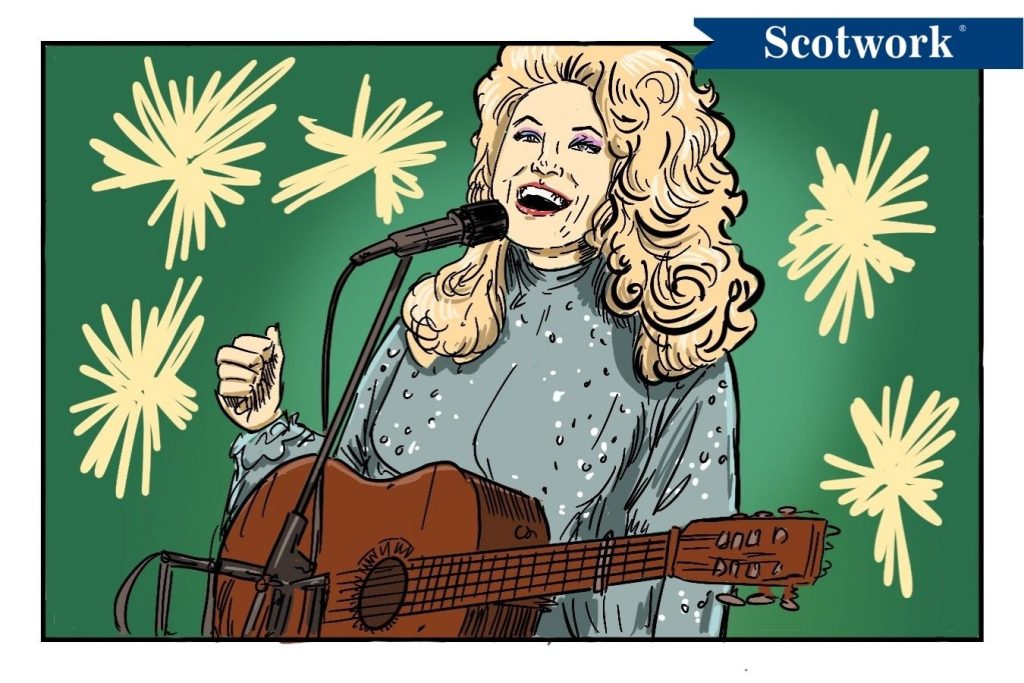
This past week, we lost Dolly Parton.
I have strong memories of riding around in my dad’s El Camino as a kid, listening to an 8-track of Dolly singing “Jolene.” My mother preferred Elvis. That car was contested territory between two music legends. At the time, I had no idea that those legends had a negotiation history of their own — and that the negotiation cost Dolly a night of tears, made her a fortune, and somehow never damaged the relationship at all.
Here’s what happened . . .
In 1974, Dolly released “I Will Always Love You.” She’d written it as a goodbye to Porter Wagoner, her mentor and duet partner, and it topped the charts. Then, word came that Elvis wanted to record it. She was thrilled. She told everyone she knew. She was invited to the studio to be there when he sang it.
The afternoon before the session, Colonel Tom Parker called her. Elvis doesn’t record anything, he told her, unless he gets at least half the publishing. Elvis, by every account, never knew about this stipulation. (That’s worth sitting with for a moment: The person whose name was on the deal was not the person making the demand.)
Dolly was 28 years old. Elvis was the biggest entertainer alive. Everything was ready to go, and this could’ve catapulted her into a new stratosphere. But she said no.
She told that night the same way for the past 50 years. It broke her heart. She cried all night. But she knew what her copyright was worth to her, and half of it was not on the table. Not even for Elvis.
Eighteen years later, Whitney Houston recorded the song for the movie The Bodyguard, and it became one of the best-selling singles in history. Dolly kept every writer’s dollar. She later bought property in Nashville with the proceeds and called it the house that Whitney built.
Four lessons in that story are worth taking into your negotiations . . .
1. Dolly knew what she valued before the phone rang.
Parker’s demand didn’t catch her flat-footed. She’d already decided what that copyright was worth, and she said so plainly. We can get squeezed late in a deal if we haven’t put a value on what’s suddenly being demanded.
2. The pressure was manufactured. She treated it that way.
The call came the afternoon before the session. Studio booked, musicians hired, plane ticket in hand, emotional investment at its peak. That’s no accident. When a new condition shows up at the last possible moment, the timing is the argument. Recognize it for what it is, and the demand loses most of its power.
3. Prestige isn’t cash.
She was offered the biggest name in the world in exchange for permanent ownership. Enormous in status, terrible in terms. This can be a trap with marquee clients or high-profile deals: Sometimes it’s not worth giving up margin, or rights, or scope in exchange for a logo that we can point to.
4. She said “no” to the term, not to the person.
This is why the relationship survived. Her refusal was aimed squarely at a publishing split, never at Elvis. She spoke about him with nothing but affection for the rest of her life. And Priscilla told her that Elvis sang the song to her the day they divorced, walking down the courthouse steps. He loved it until the end. He just never got to record it.
That last part is the one I’d underline for anybody who thinks a hard “no” burns a bridge. It doesn’t have to. What burns bridges is contempt, or surprise, or making someone feel foolish for asking. A clear “no,” given early, with a reason attached, is a respectful move at the table.
Dolly wrote something like 3,000 songs and fought to control them. She built a theme park, a publishing empire, a library program that has given away hundreds of millions of books, and several other charitable endeavors. All of that traces back to a woman who understood, very young, that the person across the table is going to ask for exactly as much as you let them.
She lost Elvis and kept the song. It was not a close call; it just felt like one. Thanks for the song, Dolly, and for the lessons underneath it.
Negotiation Training and Consulting to Help You Tell the Difference Between AI Knowledge and Experience.
As AI works its way further into our day-to-day, the ability to discern earned knowledge from AI-borrowed knowledge is essential. Rely on Scotwork’s expertise to help you push for the truth.
Similar articles
By Brian Buck | 02.10.26
The Deal After the Deal
Last week, roughly 16,000 Boeing engineers and technical workers ratified a new four-year contract, days…

By Brian Buck | 11.09.26
Your Renewal Just Got Flagged
Recently, I worked with a large sales team that showed me something they’d built: an…
By Trevor Murphy | 31.07.26
Driving a Good Deal to the Finish Line
“I have a great idea.” In a marketing agency, this statement comes up in many…