Why the Founders Almost Didn’t Sign
 Written by
Brian Buck
| 07/02/2026
Written by
Brian Buck
| 07/02/2026
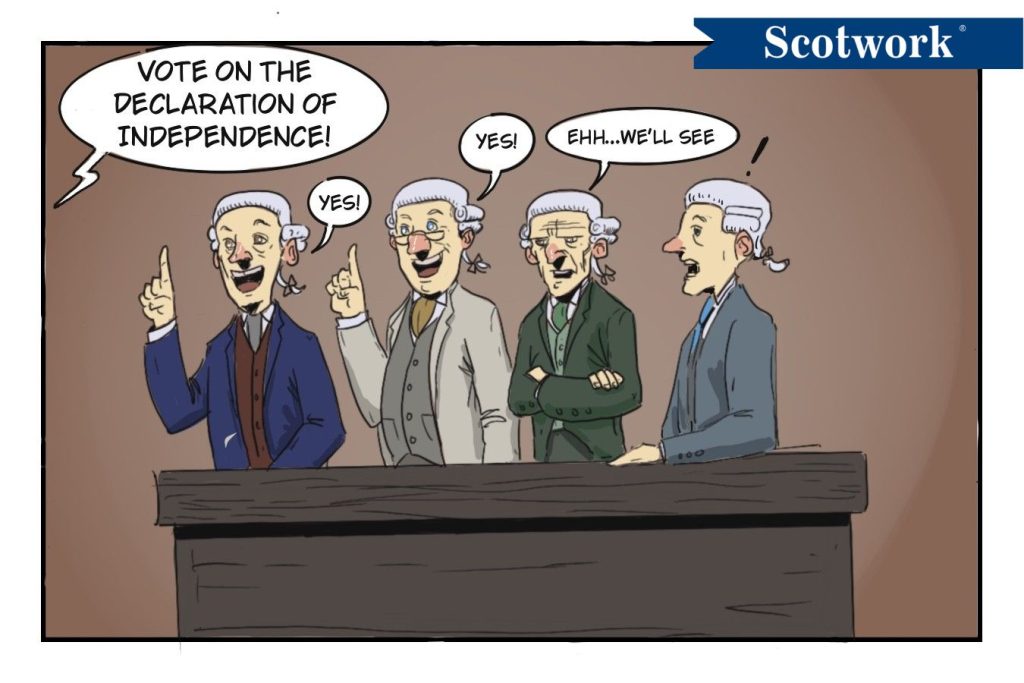
Two-hundred-and-fifty years ago, the Founding Fathers of the United States voted to declare independence. But there’s something most of us never learned in school: The deal almost didn’t happen.
For most of the summer of 1776, the 56 men gathered in the Pennsylvania State House (now Independence Hall) weren’t marching in lockstep toward liberty. Instead, they composed 13 unique delegations, each representing a colony with its own economy, its own fears, and its own reasons to walk away from the table.
The stakes of failing to reach agreement were enormous: The colonies were at war with the most powerful military in the world, and a fractured Congress meant a fractured resistance. Beneath the unity on display in the final document were real, unresolved divisions, including a fight over slavery that the delegates couldn’t settle and that would take another 89 years and a civil war to resolve.
As we celebrate the United States’ 250th anniversary, we’re reminded that the Declaration of Independence was only a starting point, imperfect and incomplete. It was the basis upon which our country has spent two-and-a-half centuries revising, expanding, and improving. A rigid agreement breaks under pressure; the Founders’ greatest achievement was that they built something resilient enough to endure.
There’s a smaller story from that same summer, less remembered, that shows flexible, creative agreement-building from the very first vote.
New York’s Nonvote
When Congress called the vote on July 2, the New York delegation didn’t vote for independence . . . or against it either. Their instructions from home hadn’t reached them, so they kept abstaining even when the Declaration was adopted on July 4. New York didn’t formally endorse the document until July 9, after the Provincial Congress authorized its delegates to do so.
Congress didn’t wait for New York. They didn’t reopen the debate, soften the language, or delay the vote until all 13 colonies were fully aligned. Instead, they moved forward with 12 votes in favor and one abstention, trusting that New York would come around — and it did, five days later.
It’s a small moment, but it’s an early example of a pattern that shows up again and again in American history: Progress rarely waits for perfect consensus. It moves forward on sufficient agreement and trusts the process to bring people the rest of the way in. That’s visible in the amendments that extended the vote, the laws that expanded who got to fully participate in the promise of the Declaration, and the slow, often difficult work of making “all men are created equal” mean what it says. None of that happened on July 4, 1776. All of it happened because the agreement signed that day was built to be revisited rather than treated as finished.
The Temptation to Hold Out for Everyone
Anyone who has sat across a table from a counterparty insisting that every stakeholder sign off before anything moves forward knows how that instinct feels.
Congress could’ve waited. Instead, they recognized what experienced negotiators know: unanimity is rare, and it’s usually not the bar you need to clear. What you need is enough alignment to move, a clear-eyed read on whether the holdout is a hard “no” or simply a “not yet,” and the humility to understand the agreement you reach today won’t be the final word.
What this means at your table of independence . . .
- Separate a hard no from a “not yet.” Which is it? Determine if you’re dealing with an actual obstacle or just a delay. Don’t let one party’s hesitation stall an entire deal.
- Moving without full alignment isn’t the same as moving without enough alignment. There’s a difference between steamrolling a genuine objection and moving a discussion forward. Knowing that difference is what separates an agreement that everyone can support from one that unravels.
- Build the deal to be revisited, not just signed. The strongest agreements aren’t the ones that get everything right on day one. They’re those flexible enough to be corrected later without falling apart. That’s true of a 250-year-old founding document, and it’s true of the contract you’re negotiating this quarter.
This July 4th, not only should we celebrate 250 years of freedom and independence, but we should also celebrate an agreement that’s held together while bending enough to allow us to grow and endure as a country. Happy Independence Day!
Negotiation Training and Consulting to Help You Build Deals Resilient Enough to Endure.
Rely on Scotwork’s expertise to help you get your best outcome: an optimal deal that stands the test of time.
Similar articles

By Brian Buck | 11.09.26
Your Renewal Just Got Flagged
Recently, I worked with a large sales team that showed me something they’d built: an…

By Brian Buck | 28.08.26
Dolly Parton and the Power of Saying No in Negotiation
This past week, we lost Dolly Parton. I have strong memories of riding around in…
By Brian Buck | 21.08.26
5 Ways to Keep Improving Your Negotiation Skills
My youngest heads back to college this month to finish her senior year. I can’t…