Improve Internal Negotiations: Be a Creator
 Written by
Brian Buck
| 07/10/2026
Written by
Brian Buck
| 07/10/2026
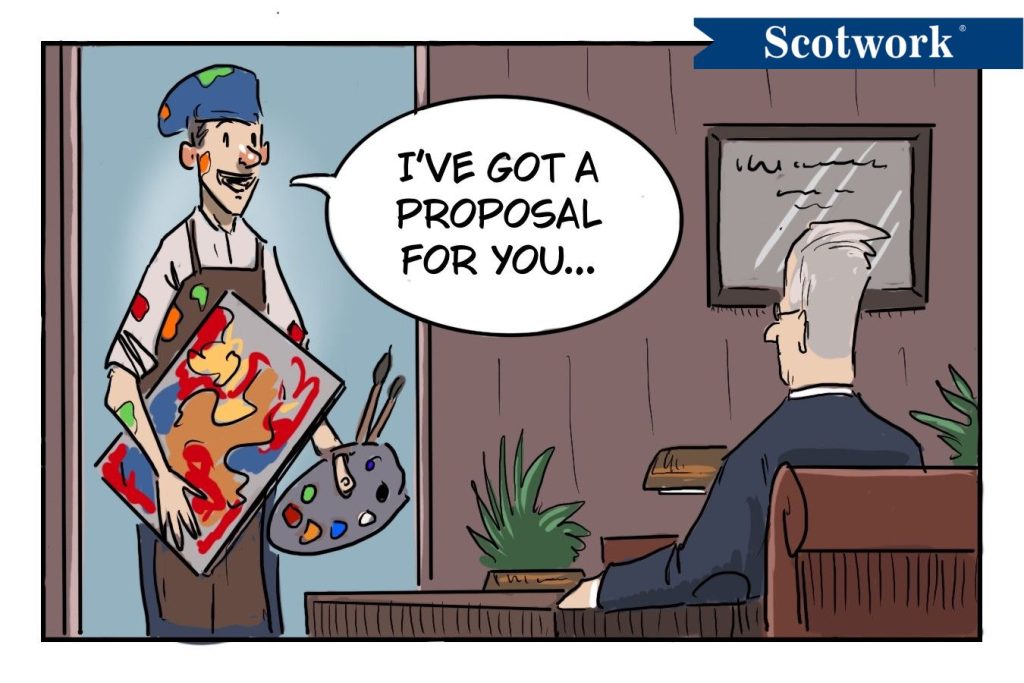
In my position, I’m frequently asked some variation of the following question: “How do I get my internal stakeholders to support my negotiation?” Whether these talks occur with a supervisor, Legal, Finance, or another stakeholder, internal negotiations are among the most frustrating. That said, there’s something you can do to make them much easier.
Recently, I had dinner with a group of friends. We debated a variety of topics. Someone would throw out a fact about something, and those seated around the table got busy fact-checking in real time. They supported their “facts” by mentioning “research” they’d done, which typically included a glance at Wikipedia.
Say what you will about Wikipedia, but it has billions of readers and more than 500 million page views every single day. What began as a community encyclopedia has become universal reference material. But it’s still a crowd-sourced repository of knowledge: The primary source of editorial scrutiny comes from its billions of readers . . . or so we think.
Any of us can become a Wikipedia editor, but there are only about a quarter-million volunteer editors per month worldwide. When it comes to creating content, only a quarter of the volunteer editors actually write new articles. So, the world’s encyclopedia works like this: Almost everyone consumes (dinner party or not), a few edit, and almost nobody creates. Yet it’s the source of truth for so many.
In other words, the creators run the place. They aren’t paid, they’re relatively unknown, they don’t have official titles, and the only power they wield is the ability to create content for Wikipedia. But they decide the topics, how positions get framed, what information gets shared, and what gets omitted. The editors can tweak the words, but the creators set the terms.
I see the exact same dynamic play out in internal negotiations every day.
When I talk to people struggling to get internal alignment, it usually goes something like this: They walk into the boss’ office and say, “We have a problem with a contract. What do you want to do?” In that moment, they turn the boss into the creator. That boss then sets the terms, the framing, the strategy — and that becomes the plan. The person who brought the problem to the table becomes the editor or, worse yet, merely the reader. While a direction has been created, it may not feel like alignment.
Here’s the change everyone can make for better internal negotiations: become the creator.
Let’s play out the same scenario from the perspective of a creator: They walk into the boss’ office and say, “We have a problem with this contract. Here’s what I recommend: We go back to them with a revised term. We’re prepared to extend the timeline in exchange, and I need your sign-off by Friday to make it work. If you can support that direction, I can get this resolved.” The creator is now setting the terms, the framing, and the strategy. The boss is now the editor of the plan.
Same problem. Completely different approach. Better alignment, and more satisfying. The second person didn’t show up with a blank page and ask someone else to fill it. They showed up with a strategy based on a problem they framed. From that point forward, that framing becomes the basis for how everyone else sees the issue.
They framed it by making a proposal. That’s a powerful move whether talking to superiors, peers, or even subordinates. They didn’t ask for permission, which invites other creators to the table. A proposal opens the door for editors who can either choose to approve or help make the proposal better.
Getting better at internal negotiations has nothing to do with status or title or authority. It has everything to do with showing up with a plan and making a proposal. Those who do that gain alignment a lot faster and easier than those who don’t. Be a creator.
Negotiation Training and Consulting to Help You Get Better at Internal Negotiations.
Rely on Scotwork’s expertise to help you show up with a plan, make a proposal, and gain alignment faster and easier than those who don’t.
Similar articles
By Kirbi Isaac | 07.08.26
Don’t Make Them Guess
A friend and I recently went out to dinner and had a great meal. We…
By Trevor Murphy | 31.07.26
Driving a Good Deal to the Finish Line
“I have a great idea.” In a marketing agency, this statement comes up in many…
By Brian Buck | 17.07.26
“I Don’t Negotiate at Home.” Really?
As I go around the country talking to groups about negotiation, I remind people that…