Who Goes First?
 Written by
Brian Buck
| 10/09/2026
Written by
Brian Buck
| 10/09/2026
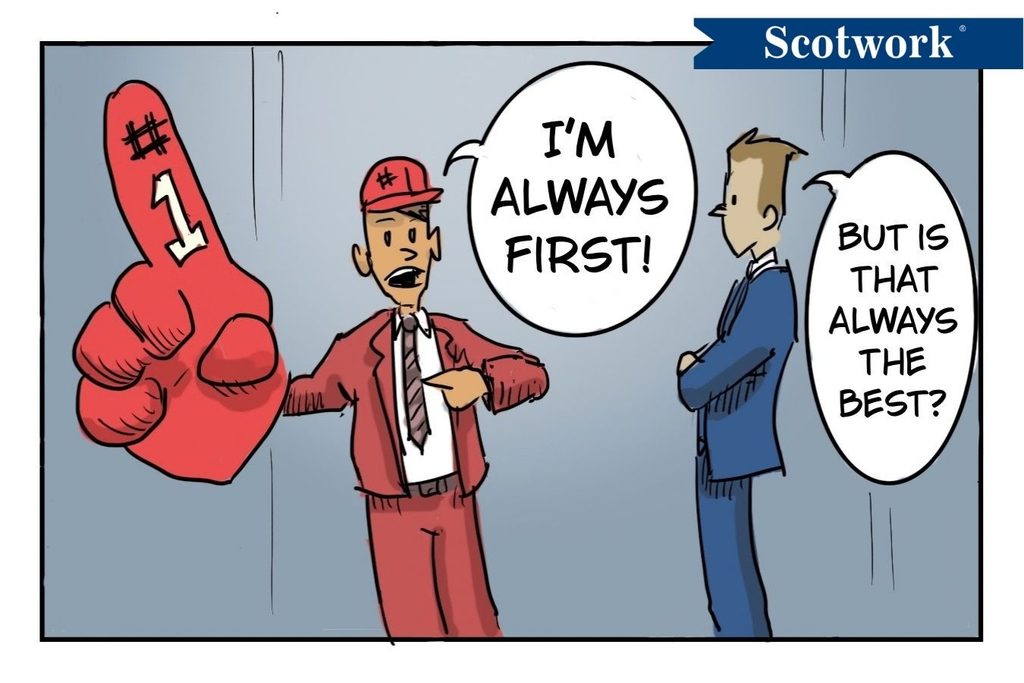
Last week, I was talking with a friend about dealing with dealers when buying a car. Before you say a word to anyone at a dealership, there’s a number on the windshield, and everything that happens next gets measured against it. You’re not working up from what the dealer paid. You’re working down from their number.
That sticker price isn’t a price at all. It’s an anchor. And it’s doing its job before the salesperson even shakes your hand.
We’ve all heard “never make the first offer.” Let the other side show their hand. That sounds prudent. It’s also how people end up negotiating within the other side’s framework, arguing about variables their counterpart chose, within the range their counterpart set.
Which brings me to the most famous anchor in film history: “I’m gonna make him an offer he can’t refuse.” On its face, that’s a threat, and in the movie, it certainly was. But get past the menace and look at the mechanics: a single proposal, framed as the only one on the table, delivered before the other side has a chance to define what’s possible. That’s not just intimidation — it’s anchoring, and it works in far more pleasant settings than the one Don Corleone had in mind.
I was with a group of union members recently, and this subject came up. Several of them said they were apprehensive about going first. When I asked why, the answer was their fear of naming the wrong number. They didn’t know what might be on the table.
That’s not an argument against going first. That’s a preparation problem. When you don’t know what’s available to negotiate, every move feels like a risk, so you wait for the other side to tell you what the conversation is about. And once they do, you’re playing their game. The reluctance to go first is almost never about the offer itself. It’s about not having done the work that makes the offer safe to make.
Here are 3 ways to make the first offer in a negotiation and make it work for you . . .
1. Earn the right to go first.
Preparation is what makes an opening offer safe. Know your objectives, know your priorities, know your limit, and know what the other side likely needs. Understand what’s negotiable beyond the obvious. Confidence to open doesn’t come from nerve; it comes from homework.
2. Give it a rationale.
Be prepared to explain your proposal. If you can’t defend it, you’re not ready to make it. Have your facts, figures, and logic at the ready. Rationale makes an offer harder to dismiss and much harder to chip away at.
3. Put it out there and let it sit.
Make the offer, then stop talking. The silence after a proposal is uncomfortable, and that discomfort is exactly where people start improving their own offer before anyone has responded to it. Let them react first.
Having said all of that, there’s a situation in which I always go first: If I’ve created a grievance. In that circumstance, I want them to go first. If I dropped the ball, they need to tell me what it will take to make things right. More often than not, what they ask for is less than I would’ve offered. People who feel heard tend to ask for less than you’d expect. In the rare case where it’s more than I can do, I’m no longer guessing. I have something concrete in front of me, and now we can negotiate an outcome.
So, back to that advice many of us have received: Going first isn’t the risk. Going first unprepared is.
Negotiation Training and Consulting to Help Make the First Move Work for You.
Rely on Scotwork’s expertise to help you prepare your best opening offer.
Get in touch with one of our experts today.
FAQ
Should I always make the first offer?
Yes. If you’ve prepared and you understand what’s on the table, opening lets you set the range and the agenda. If you haven’t, the problem isn’t the order — it’s the preparation. The only exception to going first is if you’ve created a grievance.
How do I know what’s on the table before I open?
Ask. Get curious before you get specific. Timing, scope, term, volume, and support are often easier for the other side to move on than price.
How ambitious should my opening be?
Ambitious enough to leave room to trade, grounded enough that you can defend it. If you can’t explain how you arrived at it, expect the other side to dismiss it and reset the conversation on their terms.
What do I do when they anchor first?
Don’t counter it, and don’t argue with it. Ask what it’s based on, what’s included, and what’s assumed. Then come back with your own package instead of negotiating inside theirs. Once the assumptions behind a number are visible, the number loses most of its power.
Similar articles
By Brian Buck | 02.10.26
The Deal After the Deal
Last week, roughly 16,000 Boeing engineers and technical workers ratified a new four-year contract, days…

By Brian Buck | 11.09.26
Your Renewal Just Got Flagged
Recently, I worked with a large sales team that showed me something they’d built: an…
By Brian Buck | 21.08.26
5 Ways to Keep Improving Your Negotiation Skills
My youngest heads back to college this month to finish her senior year. I can’t…