The Most Expensive Question
 Written by
Brian Buck
| 07/24/2026
Written by
Brian Buck
| 07/24/2026
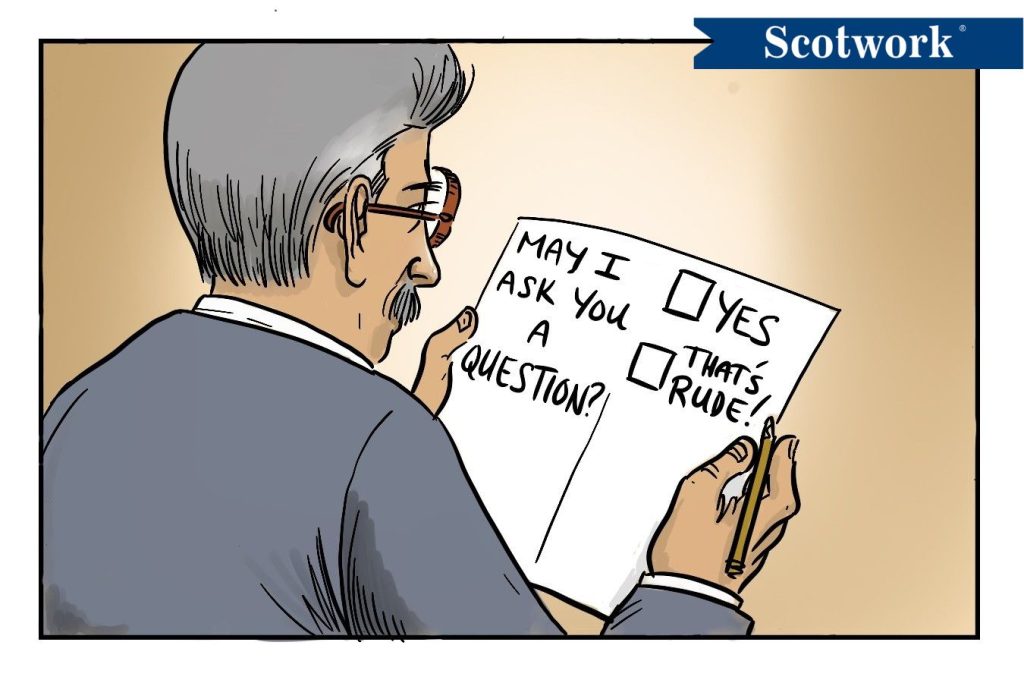
Recently, I was onstage making what I thought was an uncontroversial point: Negotiators should be more curious and ask more questions. Someone raised a hand: “Do you feel people get offended when you ask questions?”
My answer: Sometimes they are, but it’s rarely the question itself that they take issue with.
People don’t get offended by curiosity. What sets them off is a question with a hidden agenda. When it feels like a challenge, a test they didn’t agree to take, or, worse, a trap. The offense lives in the perceived intent, not in the act of asking.
Ask a pointed question with no context, and it can feel like an interrogation. “Why’s the price this high?” with nothing around it feels like an attack, and it forces the other person into a defensive posture before they even understand what you’re after.
So, the real skill is not avoiding questions. It’s structuring them in a way that makes your intent obvious, so the other side spends their energy answering instead of defending or bracing for the other shoe to drop.
Here’s how I try to do that . . .
1. Say why before you ask what. A question with a visible motive is disarming. “I want to make sure I get this right, so can I ask how you arrived at that number?” tells the other person you’re trying to understand, not catch them out.
2. Ask permission for the hard ones. “Can I ask you something direct?” hands the other person a moment of control, so they’re less likely to get defensive. It also signals that you know the question has weight, which is its own form of respect.
3. Trade for information. When the other side is reluctant to open up, do not push harder. Offer something of value in exchange for what you want to know. “If you can help me understand your flexibility in scheduling, I can share with you possible start dates to accommodate.” The exchange is mutual, and reciprocity does the heavy lifting.
4. Mind your first word. “Why did you do it that way?” sounds like a prosecution. “How did you land on that approach?” sounds like interest. Same information, completely different temperature. Lead with what and how, and save why for when you actually mean it.
5. Stop talking. The most common mistake is asking a good question and immediately trying to minimize the silence that follows. Don’t. The pause is uncomfortable on purpose. That’s when the real answer tends to surface.
Withholding questions doesn’t make you polite. In a negotiation, the alternative to asking is guessing. You’re trading your own assumptions about what the other side wants, and those are almost always wrong. Skilled negotiators identify things of lesser value to trade for things of greater value. They identify those things by asking.
The mild awkwardness of asking a direct question is real. It’s also tiny, and it passes. The cost of not asking follows you into the agreement and lives there for the length of the deal.
The most expensive question in any negotiation is the one you were too polite to ask.
Negotiation Training and Consulting to Help You Ask the Important Questions.
The most expensive question in any negotiation is the one you were too polite to ask. Rely on Scotwork’s expertise to help you structure questions for maximum effect.
Similar articles
By Brian Buck | 23.10.26
Zombie Deals
It’s zombie season, which seems like the right time to talk about deals that won’t…
By Brian Buck | 16.10.26
When the Deal Is About You
Recently, I helped a brilliant friend negotiate a job offer. He’s literally a rocket scientist….
By Brian Buck | 09.10.26
Who Goes First?
Last week, I was talking with a friend about dealing with dealers when buying a…