Power Is Rented
 Written by
Brian Buck
| 11/13/2026
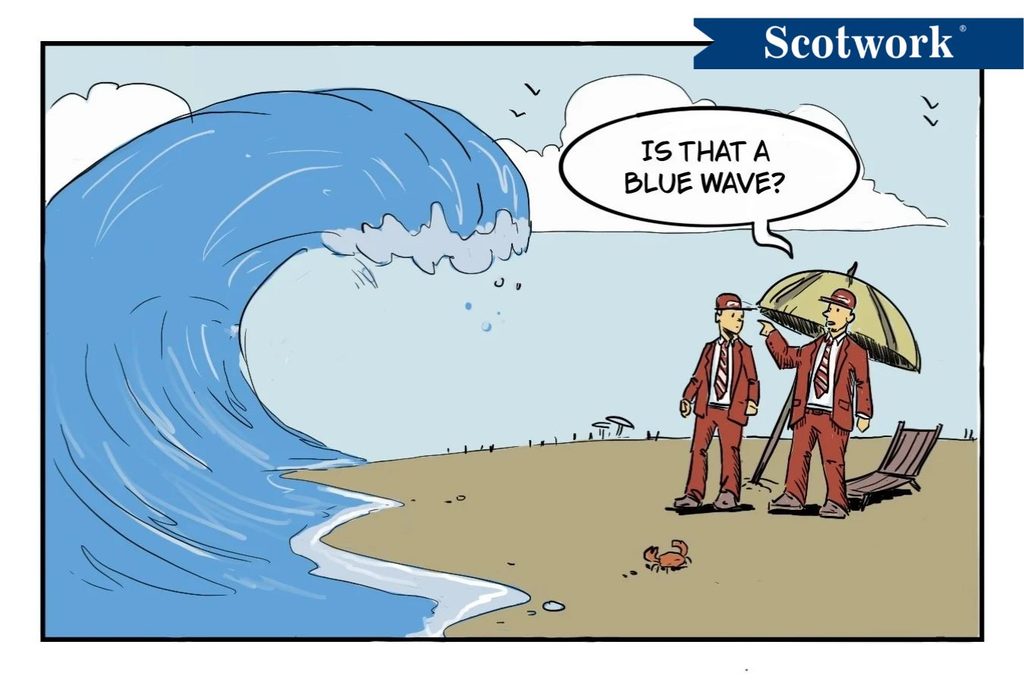
In the midterms, both chambers of the United States Congress flipped, and with that, so did the power dynamic. Before anyone reads a political argument into that statement, this almost always happens. In the midterms, the President’s party has lost ground in 20 of the last 22 elections going back to 1938. Whatever the mood of the country in any given year, the pendulum swings.
What interests me is what happens next, and it’s the same thing every time. The new majority arrives with a list of things to undo, and the length of that list tends to match how aggressively the last majority used its turn.
You can watch this play out in the Senate. In 2013, the majority eliminated the filibuster for most of the President’s nominations; the previous party in power was using it to block nominees. In 2017, the new majority extended that change to Supreme Court nominees. Each side inherited a precedent and widened it.
That’s the thing about changing the rules while you hold the gavel: The change doesn’t revert when you lose power. It waits for you. I’ve watched the same pattern play out in business, where the cycles are shorter and memories are longer.
Years ago, I worked with a brand that sold into a fast-growing retailer. The retailer beat up brands on price. They pushed through return clauses that put the risk on the supplier. They demanded ever-increasing market development funds. They frequently insisted on exclusivity.
The brands lived with it, because the volume was worth it. They signed, delivered, and then complained about the retailer to anyone who would listen. The retailer? They had all the leverage, and they used every bit of it.
Then the pandemic hit, and the supply chains came apart. Suddenly, the brands didn’t have enough product to fill everyone’s orders. They had to choose which accounts to serve. They chose the partners they liked working with, the ones who’d treated them decently and those they made better margins with.
All that leverage, built over years of growth, evaporated in weeks. And when the brands had the power, the retailer discovered exactly what its reputation was worth: less than nothing. Being difficult hadn’t been without cost — the invoice just hadn’t been opened.
Here are 5 points to help you manage your power dynamic over the long term . . .
1. Consider what the win costs.
If you impose your will, what will the other side exact when they have power? Most negotiations have a next round, and the person sitting across from you is keeping score, whether they say so or not.
2. Imposed agreements need enforcement. Built agreements get cooperation.
If you’re chasing compliance, you didn’t reach an agreement. You issued one.
3. Don’t build a weapon you’d hate pointed at you.
If you’d object to the tactic coming back at you, think hard before you use it.
4. Leave them a way to say “yes” with dignity.
People will forgive a hard deal. They don’t forgive humiliation.
5. Watch for the swing before it arrives.
Leverage shifts before it’s obvious: a new decision maker, a new alternative, a softening market, a supply problem on the horizon. The people who get caught are the ones still playing the last hand.
The pendulum always swings. The question is: What situation will you be in when it does?
Remember: power is rented.
Negotiation Training and Consulting to Help Your Team Use Manage its Power
Where will your team be when power shifts? Hopefully in the best possible position. Rely on Scotwork’s expertise to help your team manage its power wisely, regardless of how much it has in a given deal.
Get in touch with one of our experts today.
FAQ
Is it wrong to use leverage when you have it?
No. Leverage exists to be used. The distinction is between using it to reach a good agreement and using it to extract everything available, which are different goals with different consequences.
How do I know when my leverage is shifting?
Watch the inputs, not the outcomes. New competitors, new decision makers, changing capacity, changing demand. By the time it shows up in your results, the shift has already happened.
What if the other side has all the power?
Document what you’re agreeing to and why, keep your alternatives alive, and remember that conditions change faster than most people expect. The relationship you maintain under pressure is what you’ll trade on when they need something.
How do I repair a relationship I damaged with hard tactics?
Acknowledge it specifically rather than generally, and then change something concrete. Words alone won’t do it, because the other side is now pricing your behavior, not your explanations.
Similar articles
By Brian Buck | 30.10.26
A Bad Deal Is Hard to Live With
I walked away from a client. Not a small one, either. My team was stunned….
By Brian Buck | 23.10.26
Zombie Deals
It’s zombie season, which seems like the right time to talk about deals that won’t…
By Brian Buck | 16.10.26
When the Deal Is About You
Recently, I helped a brilliant friend negotiate a job offer. He’s literally a rocket scientist….